
I almost skipped Colombia. That sounds absurd now, sitting here months later with a head full of memories I keep circling back to — the weight of a hot arepa de choclo pressed into my hand at seven in the morning, the vertiginous green of Antioquia from eight hundred steps up a granite monolith, the way Cartagena’s walls hold the day’s heat long after the sun drops behind the Caribbean. But at the time, I had the same tired hesitations a lot of travelers carry. Safety concerns that belonged to a decade ago. A vague sense that Colombia was “not ready” for independent travel. I was wrong on every count, and seven days proved it.
This is how I spent a week moving through Bogotá, Cartagena, and Medellín, with detours to the Rosario Islands, Guatapé, and the coffee town of Jardín. It is not the only way to do Colombia in seven days, but it worked, and it cost less than I expected.
Day 1: Bogotá — La Candelaria and the Gold Museum
Bogotá sits at 2,640 meters above sea level, and the altitude hits you before the city does. I stepped out of El Dorado International Airport into air that felt thinner and cooler than I expected — maybe 14 degrees Celsius at midday — and took a taxi to La Candelaria for around 35,000 COP (about $8.50 USD). You can also use the TransMilenio bus system for 2,950 COP ($0.70), but with a heavy bag and jet lag, I did not have the patience to navigate the stations.
La Candelaria is the old colonial heart of the city, and it is a neighborhood that resists easy summary. One block gives you a seventeenth-century church with peeling plaster and iron balconies sagging under the weight of flower pots. The next gives you a three-story mural of a jaguar mid-leap, painted by someone whose tag you will see repeated across half the neighborhood. I dropped my bag at a hostel on Calle 12 — a private room ran 95,000 COP ($23 USD) per night — and walked to the Museo del Oro.
The Gold Museum is free on Sundays, but I visited on a Wednesday and paid 5,000 COP ($1.20). For that price, you get three floors of pre-Columbian gold artifacts that rewrite whatever shallow understanding you had of indigenous Colombian civilizations. The Muisca raft on the top floor — a tiny gold sculpture depicting the origin of the El Dorado legend — sits in a darkened room, spotlit, and it stopped me cold. I spent two hours here and could have stayed longer.
Budget tip: If you visit on a Sunday, the Gold Museum is free, and so is the adjacent Museo Botero, which houses an excellent collection of Fernando Botero’s rotund sculptures and paintings alongside works by Picasso and Dalí. Doing both on a Sunday saves you about 10,000 COP.
I ate lunch at a corrientazo spot a few blocks from the museum — a set meal of soup, rice, beans, grilled chicken, plantain, and a juice for 12,000 COP ($2.90). The food was simple and good and enormous. Corrientazos are everywhere in Bogotá, and they are the fastest way to eat well without spending much.
Day 2: Monserrate and Bogotá’s Food Scene
I woke early and took a taxi to the base of Cerro de Monserrate, the mountain that looms over the eastern edge of the city. You have three options for getting to the top: walk the steep pilgrim trail (free, roughly 90 minutes), take the funicular (27,000 COP / $6.50 round trip), or ride the teleférico cable car (same price). I walked up and took the funicular down. The trail is well-maintained but relentless — over 1,500 steps — and at Bogotá’s altitude, my lungs were burning by the halfway point. But the view from the top justified every gasping step. On a clear morning, you can see the entire basin of Bogotá stretching out in every direction, a carpet of terracotta and concrete hemmed in by green mountains.
At the summit there is a white church, a scattering of restaurants, and vendors selling hot chocolate with cheese — a combination that sounds wrong and tastes completely right. The chocolate is thick and slightly bitter; you drop a chunk of fresh white cheese into it and let it soften. I paid 8,000 COP ($1.95) for a cup and sat on the terrace watching paragliders launch off the neighboring ridge.
Back in the city, I spent the afternoon exploring Bogotá’s food scene beyond the corrientazo. The Paloquemao market is a sensory overload of tropical fruit, fresh fish, and flower stalls that stretch for what feels like a full city block. I bought a bag of gulupa (passion fruit’s smaller, tangier cousin) and a mamoncillo cluster for almost nothing — maybe 5,000 COP total. For dinner, I splurged at a restaurant in Chapinero called Leo, where chef Leonor Espinosa builds dishes around indigenous Colombian ingredients. A tasting menu runs around 350,000 COP ($85 USD). It was the most expensive meal of the trip and worth every peso. A plate arrived with ants — hormigas culonas, big-bottomed ants from Santander — scattered over a smear of avocado. They tasted nutty and faintly smoky, and I kept reaching for more.
Budget tip: Chapinero is full of mid-range restaurants where you can eat very well for 40,000-60,000 COP ($10-$15). Try the ajiaco at La Puerta Falsa near Plaza Bolívar for a more traditional option — a bowl costs about 18,000 COP ($4.35), and the recipe has not changed in decades.
Day 3: Fly to Cartagena
The flight from Bogotá to Cartagena takes about an hour and forty minutes. I booked with Viva Air (now part of Avianca’s low-cost operation) roughly three weeks out and paid 185,000 COP ($45 USD) one way, carry-on only. If you book earlier or catch a sale, you can find flights for 120,000-150,000 COP. The temperature difference hits you like a wall when you step off the plane — Bogotá’s cool fourteen degrees replaced by Cartagena’s sticky thirty-three.
Getting there: From Rafael Núñez Airport, a taxi to the walled city costs about 15,000-20,000 COP ($3.60-$4.85). Use the official taxi stand inside the terminal and confirm the price before getting in. Uber works in Cartagena but can attract hassle from taxi drivers, so I stuck with official cabs.
I checked into a guesthouse in Getsemanĩ — more on that neighborhood in a moment — and spent the rest of the afternoon acclimatizing. That meant finding shade, drinking water, and eating a plate of ceviche from a street cart near the Torre del Reloj for 15,000 COP ($3.60). The ceviche was made with corvina, drenched in lime and aji, and came with a side of patacones (smashed fried green plantain). I sat on a bollard in the shade and ate slowly, watching horse-drawn carriages clip past the old clock tower.
Day 4: The Walled City and Getsemanĩ
Cartagena’s Ciudad Amurallada — the walled city — is the postcard version of Colombia, and it earns the hype. The Spanish colonial architecture is immaculately preserved: bougainvillea cascading over balconies painted in ochre and cobalt, massive wooden doors studded with iron, plazas where old men play dominoes under ceiba trees. I walked for hours without a plan, which is the right way to do it. The Palacio de la Inquisición (25,000 COP / $6 entry) is grimly fascinating — instruments of torture displayed in a beautiful courtyard — and the church of San Pedro Claver is worth a visit for its quiet cloisters alone.
But the neighborhood that surprised me was Getsemanĩ, just outside the walls. Five years ago, Getsemanĩ was the rough-edged barrio where backpackers stayed because the walled city was too expensive. Now it is in the full grip of gentrification — craft cocktail bars next to family-run fritangas, boutique hotels nudging against hardware stores — but it still has more character than the polished centro. The street art here is extraordinary. Entire facades serve as canvases for murals addressing displacement, Afro-Colombian identity, and the peace process. I joined a free walking tour (tip-based, I gave 30,000 COP / $7.25) that contextualized the art and the neighborhood’s fraught relationship with tourism money.
Dinner was at a plastic-table restaurant in Getsemanĩ where I had fried red snapper with coconut rice, a salad, and a cold Club Colombia beer for 32,000 COP ($7.75). The fish was whole, crispy-skinned, and the coconut rice had that faintly sweet chew that I never managed to replicate at home.
Budget tip: Cartagena’s walled city restaurants are tourist-priced. Walk ten minutes into Getsemanĩ or the Bazurto area for meals at half the cost. The Bazurto market itself is chaotic and not for the faint-hearted, but the food stalls inside serve some of the best and cheapest seafood in the city.
Day 5: Rosario Islands Day Trip
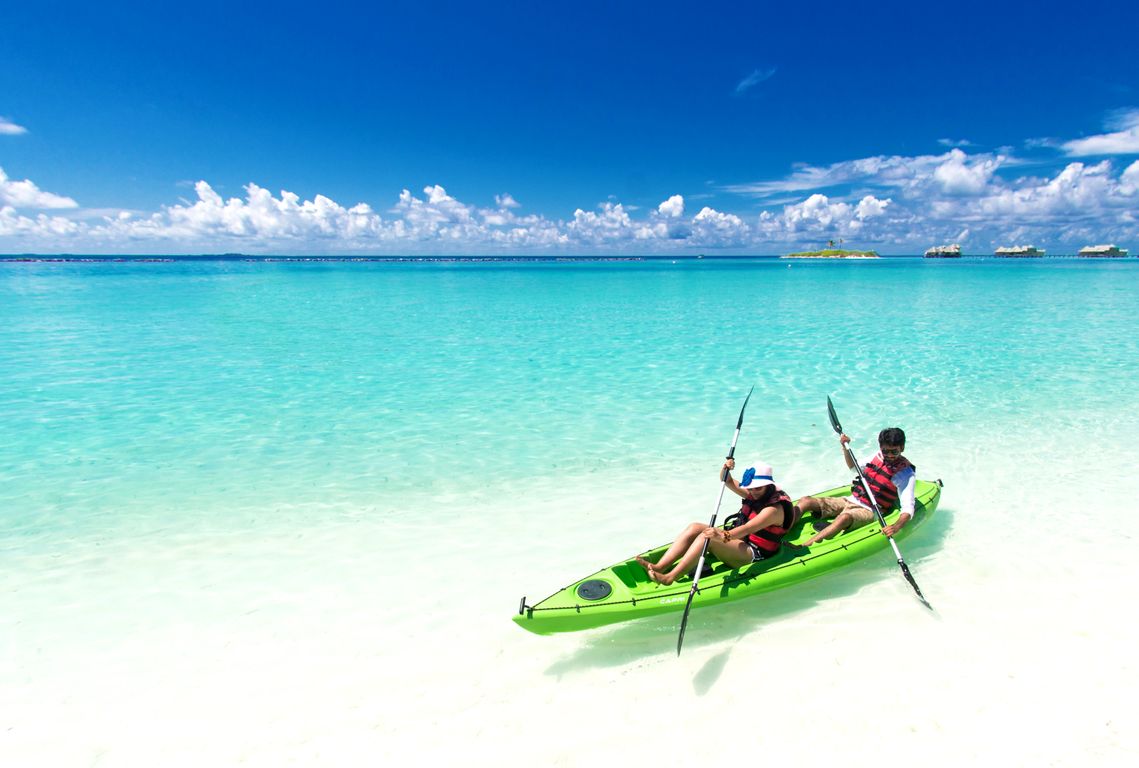
The Islas del Rosario are a cluster of small coral islands about forty-five minutes by speedboat from Cartagena’s port. Day trips run between 80,000 and 150,000 COP ($19-$36 USD) depending on what is included. I booked through my guesthouse for 100,000 COP ($24), which covered the boat, lunch on Isla Grande, and a stop at the Oceanario (a small open-water aquarium). The boat leaves early — 8 AM from the Muelle de los Pegasos — and the ride is bumpy enough that sitting at the back is a mistake if you have a sensitive stomach.
The islands themselves are beautiful in a simple, unmanicured way. The water is that impossible turquoise you see in advertisements, and the sand is coarse and warm. I snorkeled for an hour over a reef that was in decent shape — not the most pristine I have seen, but healthy enough to spot parrotfish, blue tangs, and a nurse shark resting on the bottom. Lunch was fried fish with coconut rice (again — you eat a lot of coconut rice on the coast) and a cold beer on a dock over the water.
I will be honest: the Rosario Islands are not some untouched paradise. On weekends, the beaches fill with day-trippers and the music from competing Bluetooth speakers creates a wall of reggaeton. I went on a Thursday, which helped. If you have more time and money, consider staying overnight on one of the smaller islands — Isla Mucura or Isla Palá have guesthouses starting around 250,000 COP ($60) per night — where you get the beaches to yourself after the day boats leave.
Getting there: Book your Rosario Islands trip directly at the port or through your accommodation. Avoid the touts on the street near the clock tower, who tend to overpromise and underdeliver. Confirm what is included — some “all-inclusive” packages hit you with surprise fees for the national park entry (18,500 COP / $4.50) or the Oceanario (40,000 COP / $9.70) once you arrive.
Day 6: Fly to Medellín
Another flight, another climate shift. Cartagena to Medellín cost me 165,000 COP ($40 USD) with LATAM, and the flight took just over an hour. Medellín’s José María Córdova Airport sits on a mountain plateau outside the city, so the taxi or shared van into El Poblado takes forty-five minutes to an hour (taxi around 95,000 COP / $23, or a shared colectivo for 18,000 COP / $4.35 per person). The drive down into the Aburrá Valley is dramatic — you descend through cloud forest into a sprawl of red brick that fills the valley floor and climbs the surrounding slopes.
Medellín is often called the City of Eternal Spring, and the nickname is accurate. The temperature hovers around 22-28 degrees Celsius year-round. After Cartagena’s swelter, it felt like stepping into air conditioning. I based myself in Laureles rather than El Poblado. Laureles is a residential neighborhood with good restaurants, a calmer pace, and less of the gringo-trail atmosphere that El Poblado has developed. A private room in a small hotel cost 110,000 COP ($26.50) per night.
That evening I walked to Parque Lleras in El Poblado just to see it — the area is Medellín’s nightlife and restaurant hub — and had dinner at a paisa restaurant where I ordered a bandeja paisa for the first time in the country where it belongs. The plate is an absurd mountain of food: red beans, white rice, chicharrón, ground beef, chorizo, fried egg, sweet plantain, avocado, and an arepa. All of it for 28,000 COP ($6.80). I finished maybe seventy percent of it and regretted nothing.
Day 7 (Morning): Comuna 13 and the Cable Cars
No visit to Medellín makes sense without spending time in Comuna 13. Twenty years ago, this hillside neighborhood was one of the most dangerous places in Colombia — controlled by paramilitaries, scarred by military operations, and largely abandoned by the state. Today it is a vivid, complicated testament to urban transformation. The outdoor escalators installed in 2011, which replaced a grueling climb for residents, now also carry tourists up through layers of street art, hip-hop performances, and small shops selling handmade crafts.
I took a guided tour with a local resident — 60,000 COP ($14.50) for two hours — and I would strongly recommend doing the same rather than wandering alone. Not for safety reasons; the neighborhood is safe for visitors during the day. But because the stories behind the murals, the escalators, and the community projects do not explain themselves. Our guide, who grew up in Comuna 13 during the worst years, spoke matter-of-factly about things that were hard to hear. He also spoke with clear pride about what the community has built since. It was the most affecting morning of the trip.
Afterward, I rode the Metrocable — Medellín’s public cable car system integrated into the metro network — from San Javier station up to La Aurora. The ride costs the same as a metro ticket: 2,950 COP ($0.70). The views from the gondola over the comunas below are staggering. You see the density of life on these hillsides — the stacked houses, the narrow staircases, the soccer fields wedged into impossible slopes — in a way that no street-level walk can replicate.
Budget tip: Medellín’s entire metro and Metrocable system runs on a single fare of 2,950 COP. Buy a reloadable Cívica card at any station for 8,000 COP ($1.95) to avoid buying individual tickets. The card also works on feeder buses.
Day 7 (Afternoon Extension): Guatapé Day Trip
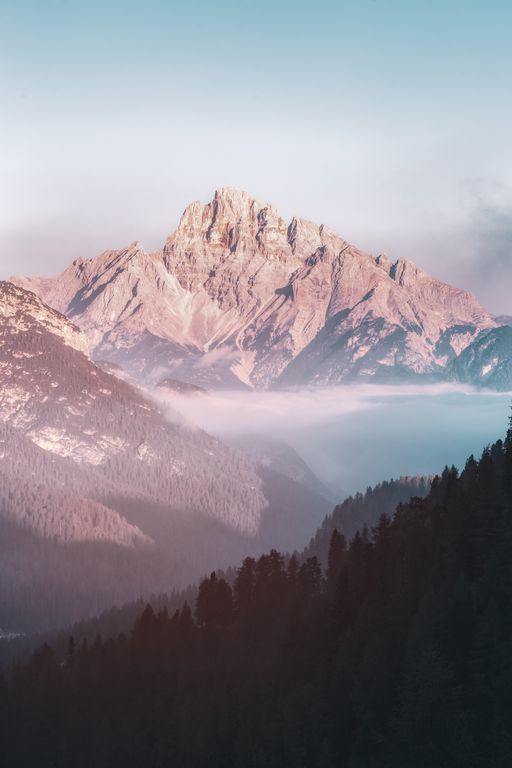
If you have an extra day — and I stretched my itinerary to squeeze this in — Guatapé is an easy and spectacular day trip from Medellín. Buses leave from Terminal del Norte roughly every hour and cost 17,000 COP ($4.10) each way. The ride takes about two hours through increasingly beautiful Antioqueño countryside: green dairy farms, roadside fruit vendors, and hills that keep getting steeper.
The main event is La Piedra del Peñol, a 220-meter granite monolith that rises out of the landscape like something from a science fiction film. You climb it via 740 steps built into a crack in the rock face. The staircase is steep and narrow in places, and the vertigo is real — you are essentially ascending a fissure in a vertical rock wall with open sky on either side. But the view from the top is one of those genuinely jaw-dropping panoramas that make you forget the burning in your thighs. The reservoir below stretches in every direction, its fingers of water reaching between forested peninsulas, the whole scene impossibly green.
Entry to the rock costs 25,000 COP ($6). At the top, there is a small shop selling water and snacks at predictably inflated prices. Bring your own.
The town of Guatapé itself is worth an hour’s wander. The buildings are decorated with colorful bas-relief panels called zócalos, each one depicting a different scene — animals, people, abstract patterns. It is achingly photogenic, the kind of place where every street corner looks composed. I ate a trout lunch at a lakeside restaurant for 22,000 COP ($5.30) and caught the 4 PM bus back to Medellín.
Getting there: From Medellín’s Terminal del Norte, look for buses marked “Guatapé” — the major operators are Sotrasanvicente and Sotrapenol. Tell the driver you want to stop at La Piedra (the rock) before continuing to Guatapé town. A mototaxi between the rock and the town costs about 8,000 COP ($1.95).
Bonus: The Coffee Region — Jardín
If your schedule allows one more detour, skip the more touristed Salento and go to Jardín instead. This small town in southwest Antioquia is quieter, cheaper, and just as beautiful. The bus from Medellín takes about four hours and costs around 35,000 COP ($8.50). The road winds through mountain passes with views that make the travel time feel like part of the experience rather than an obstacle.
Jardín’s main square is one of the prettiest in Colombia — a tree-shaded plaza surrounded by brightly painted colonial buildings, anchored by a neo-Gothic basilica that looks like it wandered in from a European postcard. Old men sit on benches drinking tinto (black coffee so sweet it could double as dessert), and the pace of life is slow enough to feel almost theatrical. I spent a morning on a coffee farm tour (45,000 COP / $10.90) where I picked, processed, and roasted my own coffee with a family that has been farming the same hillside for three generations. The coffee was excellent — fruity, clean, with none of the bitterness I associate with commercial Colombian brands.
In the afternoon, I hiked to the Cueva del Esplendor, a waterfall that pours through a hole in the ceiling of a cave. The hike takes about two hours each way through farmland and cloud forest, and you need to pay a 15,000 COP ($3.60) access fee. The cave itself is a place of ridiculous natural beauty — a column of water falling into a turquoise pool inside a rock chamber lit by the opening above. I stood there for twenty minutes, wet from the spray, not wanting to leave.
Wrap-Up and Logistics
Seven days is not enough for Colombia. I knew that before I went, and I felt it more sharply by the end. I did not make it to the Amazon, the Tatacoa Desert, the Pacific coast, or the lost city trek near Santa Marta. Colombia is a country that rewards slow travel, and cramming three cities plus day trips into a week means you are always moving. That said, the domestic flight network makes the triangle of Bogotá-Cartagena-Medellín surprisingly efficient, and each city offers enough to fill several days on its own.
Total Cost Breakdown (7 Days)
Here is roughly what I spent, traveling solo on a mid-range budget — private rooms, eating well, not skipping experiences but also not staying at luxury hotels:
- Flights (domestic): Bogotá to Cartagena 185,000 COP ($45), Cartagena to Medellín 165,000 COP ($40). Total: 350,000 COP ($85).
- Accommodation (7 nights): Average 100,000-110,000 COP ($24-$27) per night. Total: roughly 735,000 COP ($178).
- Food: Budget meals 12,000-18,000 COP ($3-$4.35), mid-range dinners 30,000-60,000 COP ($7.25-$14.50), one splurge 350,000 COP ($85). Total without the splurge: roughly 350,000 COP ($85). With the splurge: 700,000 COP ($170).
- Activities and entry fees: Roughly 300,000 COP ($73).
- Local transport (taxis, metro, buses): Roughly 250,000 COP ($60).
Grand total: approximately 1,985,000 COP ($480 USD) for seven days, excluding international flights and the Leo dinner. Add the splurge dinner and you are at about $565. Colombia remains one of the most affordable countries in South America for travelers, and the value you get — in food quality, in landscape diversity, in cultural richness — is hard to match anywhere else on the continent.
Practical Notes
Money: ATMs are everywhere. I used a Wise card and withdrew pesos as needed. Most ATMs charge a fee of 10,000-15,000 COP per withdrawal ($2.40-$3.60), so withdraw larger amounts less frequently. Credit cards are accepted at most restaurants and shops in tourist areas, but carry cash for markets, street food, and small towns.
Safety: I felt safe throughout the trip. Common-sense precautions apply — do not flash expensive electronics on the street, be aware of your surroundings at night, use official taxis or apps like InDriver. Bogotá’s La Candelaria can feel sketchy after dark on quieter streets; stick to well-lit areas or take a cab. Medellín and Cartagena felt comfortable at all hours in the neighborhoods I stayed in.
Language: Basic Spanish helps enormously. Outside the tourist cores, English is not widely spoken. I got by with intermediate Spanish, and the conversations it opened — with taxi drivers, market vendors, tour guides — were half the richness of the trip. Download the Google Translate offline Spanish pack if your Spanish is limited.
SIM card: I bought a Claro SIM at the Bogotá airport for 50,000 COP ($12) with 10 GB of data. Coverage was solid in all three cities and decent on the roads between them. Tigo and Movistar are alternatives with comparable coverage.
Best time to visit: The dry seasons — December to March and July to August — are the most popular. I went in early July and had mostly clear skies with occasional afternoon showers in Bogotá and Medellín. Cartagena was hot and humid regardless. Shoulder months like June and September offer lower prices and fewer crowds with only slightly more rain.
Colombia changed something in the way I think about travel in Latin America. Not because it was easy or comfortable in every moment — the bus rides are long, the altitude adjustment is real, the heat on the coast is relentless. But because it combined intensity with warmth in a way I had not experienced before. The country is not interested in performing for tourists. It is busy being itself, loudly and unapologetically, and if you show up willing to meet it on those terms, it gives back tenfold.
I left Medellín on the last morning with a bag of whole-bean coffee from Jardín, a phone full of photographs I keep scrolling through, and an open tab on my laptop with flights back. The return trip is not a question of if. It is a question of how many weeks I can clear.
