
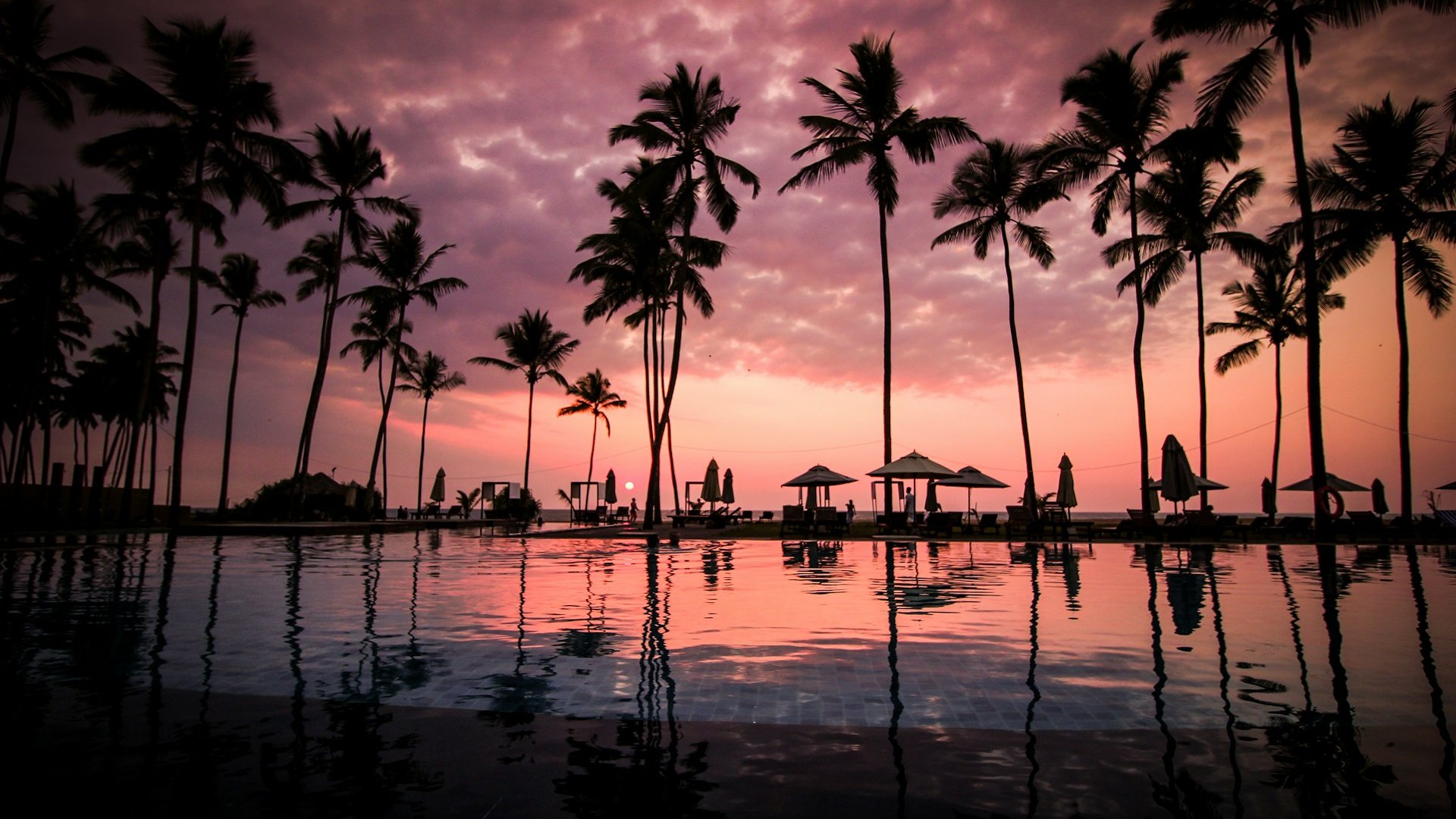
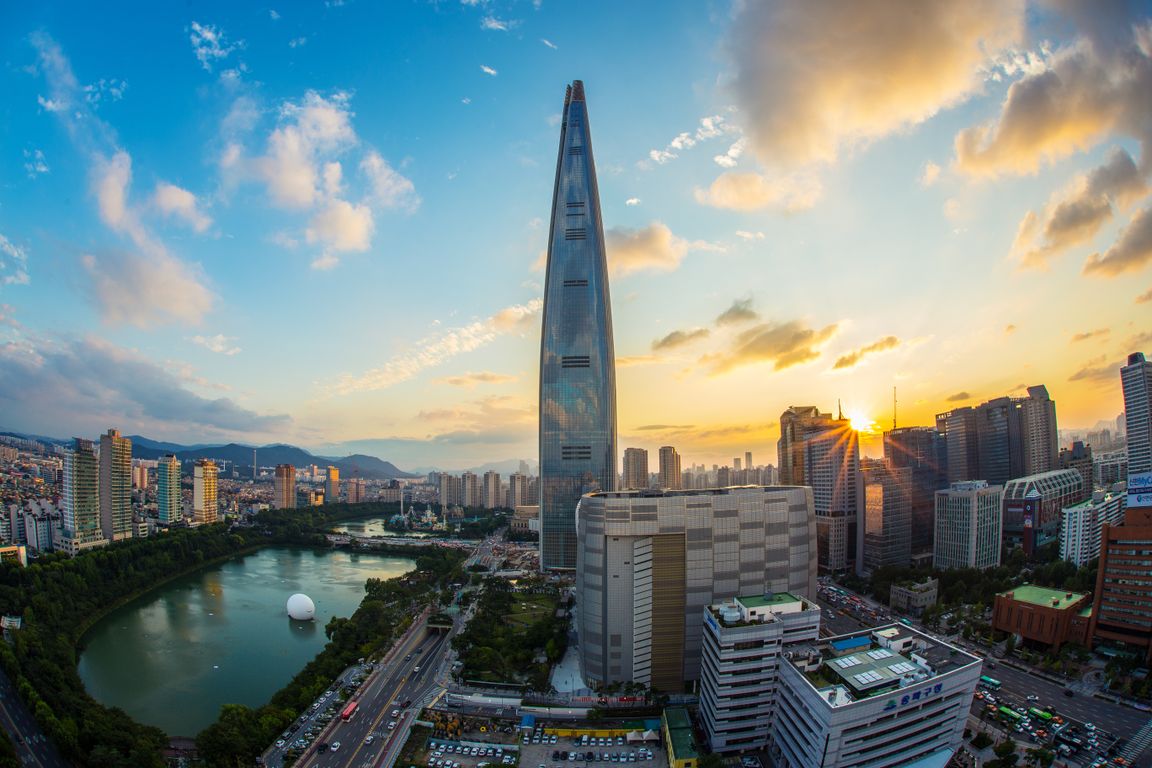
I was standing on the glass floor of Lotte World Tower’s Seoul Sky Observatory, 555 meters above the neon sprawl of Songpa-gu, when it hit me: South Korea is a country that builds the future on top of the ancient without blinking. Two hours earlier, I’d been kneeling on heated ondol floors in a 600-year-old hanok. Now I was watching KTX bullet trains thread between skyscrapers like silver needles. Over seven days, I traced a route from Seoul’s palace gates south through the DMZ’s eerie silence, into Gyeongju’s burial mounds and tombs, and finally to Busan’s crashing Pacific surf — covering roughly 450 kilometers by high-speed rail, city bus, and plenty of walking. I’ve reported from 40-plus countries for travel publications, and South Korea remains one of the most rewarding destinations I return to: affordable, safe, electrifyingly modern, and deeply rooted in traditions that still shape daily life. Here’s how to do it in a week.

1. SEOUL’S GYEONGBOKGUNG PALACE AND BUKCHON HANOK VILLAGE

Start where Seoul itself started. Gyeongbokgung Palace (3 Sajik-ro, Jongno-gu; admission 3,000 KRW / about 2 USD) opens at 9 a.m., and I cannot stress enough: be there when the gates swing open. By mid-morning, tour groups flood the courtyards and the Instagram hanbok-rental crowd turns every corridor into a photo set. Early birds get the throne hall, Geunjeongjeon, virtually alone — its double-tiered stone platform and painted eaves framing Bugaksan mountain behind it in a composition that hasn’t changed since 1395. Free English-language guided tours depart at 10 a.m., 12:30 p.m., and 2:30 p.m.; they last 90 minutes and are genuinely excellent, covering architecture, court rituals, and the Japanese colonial destruction that leveled most of the complex.
After the palace, walk north ten minutes to Bukchon Hanok Village. This hillside neighborhood of traditional tile-roofed hanok houses is beautiful but controversial — residents have grown weary of tourists peering into their living rooms. Respect the “quiet please” signs posted on nearly every alley. The best viewpoint is from Bukchon 5-gil and 6-gil, where the alleyways frame rows of curved rooftops cascading downhill toward Changdeokgung Palace. I spent an hour here sketching and was politely asked to move along by a grandmother hauling groceries — a fair reminder that this is a neighborhood first, an attraction second.
For lunch, duck into Tosokchon Samgyetang (5 Jahamun-ro 5-gil, Jongno-gu), a legendary spot for ginseng chicken soup. A bowl of their signature samgyetang costs 19,000 KRW (about 14 USD) and arrives bubbling in a stone pot, a whole young chicken stuffed with glutinous rice, ginseng root, jujubes, and garlic. The line can stretch 30 minutes on weekends, but it moves fast. Tip: there is no tipping in South Korea. Seriously. Don’t do it — it confuses staff and can even cause offense.
In the afternoon, cross east to Changdeokgung Palace (99 Yulgok-ro, Jongno-gu; 3,000 KRW / 2 USD), which I actually prefer to Gyeongbokgung. Its Secret Garden (Huwon) requires a separate guided tour ticket (5,000 KRW / 3.60 USD) and is limited to small groups, so book online at least a day ahead through the Cultural Heritage Administration website. The garden’s 300-year-old pavilions reflected in lotus ponds are the single most photogenic scene in Seoul, full stop.
Planning tip: Buy the integrated palace pass (10,000 KRW / 7.25 USD) covering all five Joseon palaces and Jongmyo Shrine. It’s valid for three months and saves roughly 40 percent versus individual tickets. Grab it at any palace ticket window.
2. MYEONGDONG, HONGDAE AND K-CULTURE
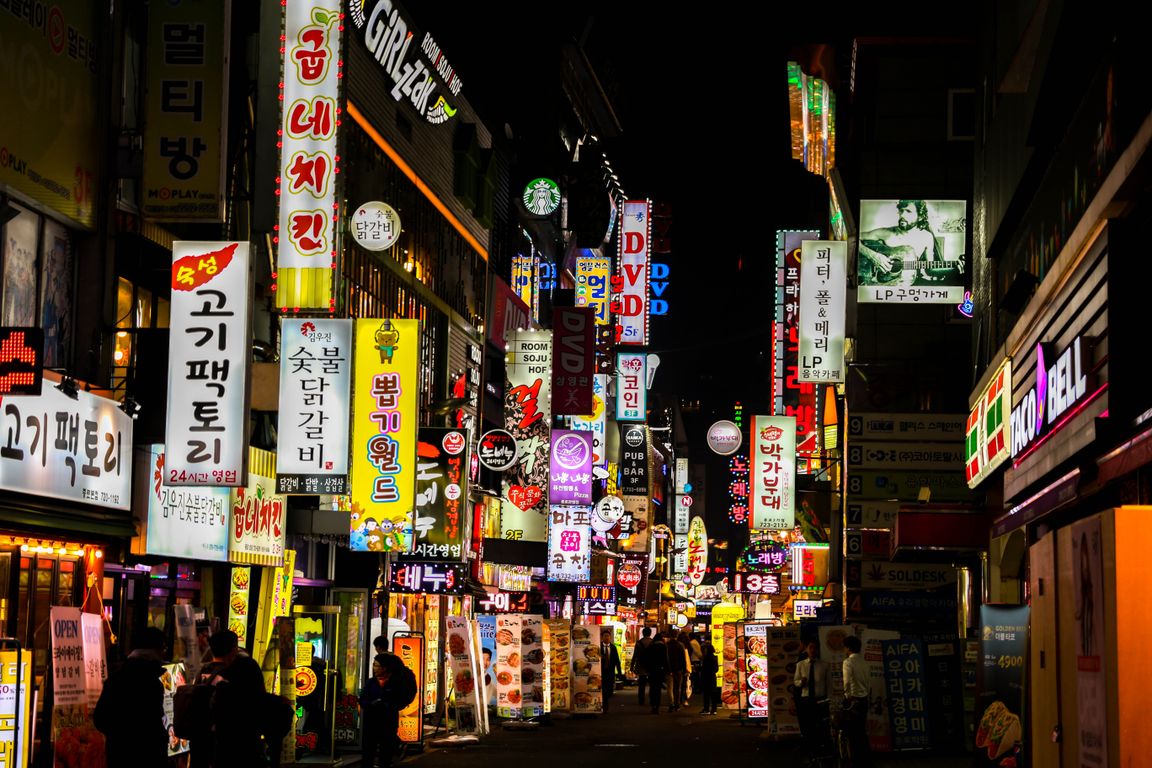
Seoul’s pop-culture engine runs on two neighborhoods: Myeongdong for shopping and skincare, Hongdae for music, art, and nightlife. I spent a full day bouncing between them on Subway Line 2 (base fare 1,400 KRW / 1 USD with T-money card) and barely scratched the surface. Myeongdong is a sensory avalanche — ten-story department stores, K-beauty shops handing out free sheet-mask samples on every corner, and street-food vendors grilling egg bread (gyeran-ppang, 1,000 KRW / 0.70 USD) and stretching 30-centimeter corn dogs rolled in french fries (2,500 KRW / 1.80 USD). The flagship Olive Young store on Myeongdong’s main drag is four floors of Korean skincare at prices that make Western Sephora look like a scam. I loaded up on COSRX snail mucin essence (12,900 KRW / 9.35 USD) and Anua cleansing oil (18,000 KRW / 13 USD), both roughly half their U.S. retail prices.
By evening, shift to Hongdae (Hongik University area, Mapo-gu). The pedestrian zone near Exit 9 of Hongdae Station erupts nightly with buskers, breakdancers, and K-pop cover groups whose choreography would humble most professional dancers. On Friday and Saturday nights, the energy is almost overwhelming. I ducked into Club FF (underground floor, 56 Wausan-ro 21-gil; cover 10,000 KRW / 7.25 USD including one drink) for a live indie rock set that reminded me Korea’s music scene extends far beyond idol groups.
For K-pop devotees, HYBE Insight (42 Hangang-daero, Yongsan-gu; 22,000 KRW / 16 USD) is the polished museum experience attached to BTS’s label headquarters. Reservations are required and sell out weeks ahead — book on the HYBE website the moment your travel dates are confirmed. The interactive exhibits on music production are genuinely fascinating even for non-fans, though the gift shop will test your luggage weight limits.
Late-night hunger? Hongdae Jokbal Alley near Sangsu Station has a row of restaurants serving braised pig’s trotters (jokbal) sliced thin and wrapped in perilla leaves. I ate at Manjok Ohyang Jokbal (a small portion for 29,000 KRW / 21 USD feeds two comfortably) and it was one of the best meals of the trip — tender, slightly sweet, with a five-spice depth that lingers.
Planning tip: Download the Naver Map app before arriving. Google Maps works poorly in South Korea due to national security mapping restrictions. Naver gives accurate transit directions, walking routes, and restaurant reviews (use the translate function for Korean reviews — they’re far more reliable than English-language listings).
3. KOREAN FOOD DEEP-DIVE: BBQ, STREET FOOD AND MARKETS
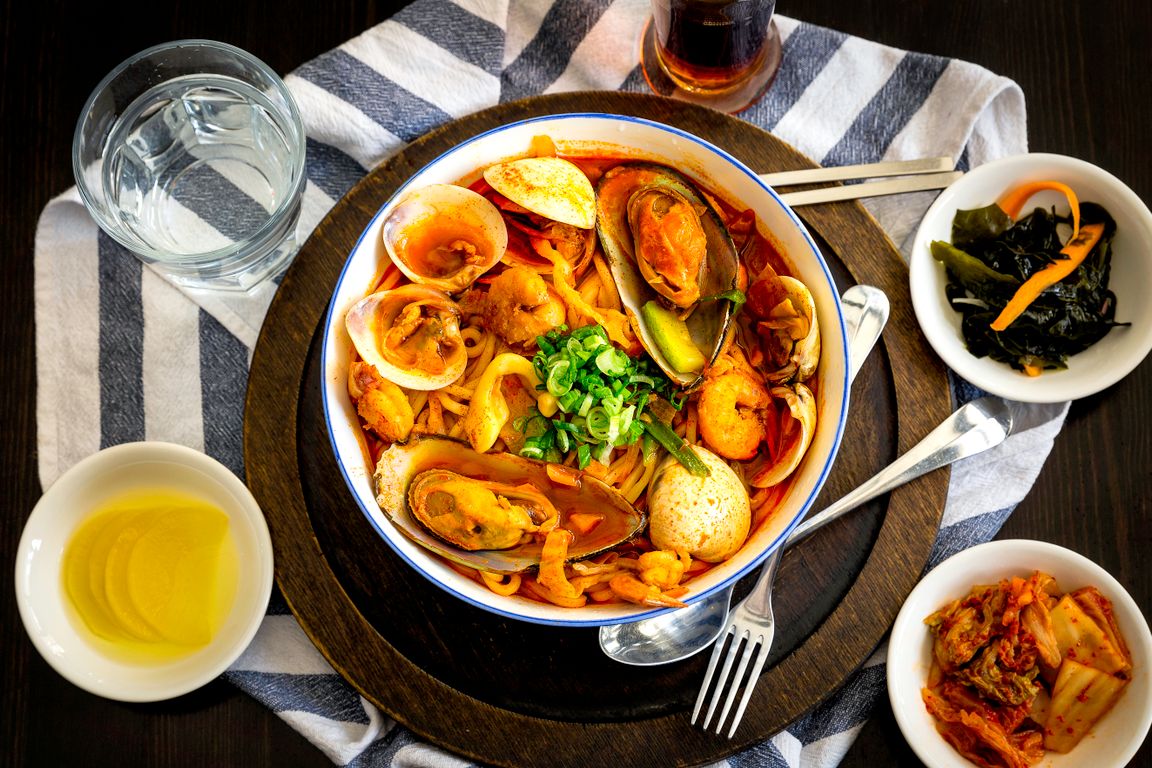
Korean food deserves its own chapter because eating here is not a supporting act to sightseeing — it is the sightseeing. Start with Korean BBQ, the dish most visitors obsess over. In Seoul, I tested two tiers. For the splurge experience, Maple Tree House (Mapodaegyo-namcheol, Mapo-gu) serves USDA Prime-grade marbled beef galbi that melts into the charcoal grill. A set for two runs about 89,000 KRW (64 USD) and includes soup, egg soufflé, and a parade of banchan. For something more local and half the price, Yukjeon Hoegwan (19-4 Supyo-ro 28-gil, Jongno-gu), operating since 1932, grills thin-sliced bulgogi on dome-shaped copper pans. Two people eat well for 42,000 KRW (30 USD). The meat is leaner, the marinade sweeter, and the atmosphere — low ceilings, soju-flushed salarymen, sticky tabletops — is infinitely more authentic.
Street food is where Korea punches hardest on a budget. At Gwangjang Market (88 Changgyeonggung-ro, Jongno-gu; open daily, busiest after 11 a.m.), I worked through a greatest-hits lineup: bindaetteok (mung bean pancake, 4,000 KRW / 2.90 USD), mayak gimbap — “addictive rice rolls” named honestly — at 3,000 KRW (2.20 USD) for ten pieces, and yukhoe (Korean beef tartare with raw egg yolk, 15,000 KRW / 10.90 USD) that I’d stack against any steak tartare in Paris. The market vendors are brusque and efficient; point, pay, sit on the plastic stool, eat. It is magnificent.
For a more curated market experience, Tongin Market (18 Jahamun-ro 15-gil, Jongno-gu) runs a unique “lunchbox cafe” system: buy a tray and tokens (5,000 KRW / 3.60 USD for 10 coins) at the entrance, then trade coins at individual stalls for dishes. One coin gets you a serving of tteokbokki, two coins for a piece of jeon (savory pancake). It’s touristy but fun, and forcing yourself to budget ten tokens across 70 stalls is a delicious game.
Do not sleep on convenience store food. South Korea’s CU, GS25, and 7-Eleven stores stock triangle gimbap (800-1,200 KRW / 0.60-0.90 USD), microwavable ramyeon bowls (1,500 KRW / 1.10 USD), and surprisingly good fried chicken bites. When jet lag or exhaustion kills your motivation to find a restaurant, the nearest convenience store is never more than 200 meters away in any Korean city.
Planning tip: Many BBQ restaurants require a minimum order of two servings (2-inbun) per meat type. Solo travelers can get around this at chains like Gobong Samgyeopsal, which cater to single diners, or by visiting at lunch when some places relax the rule. Alternatively, befriend another solo traveler at your hostel — it’s the most reliable icebreaker in Korea.
4. DMZ AND JSA VISIT
The Demilitarized Zone is 50 kilometers north of Seoul, and it is the strangest place I have ever visited. This four-kilometer-wide buffer strip between North and South Korea is simultaneously the most heavily armed border on earth and a thriving wildlife corridor where endangered red-crowned cranes nest in the minefields. You cannot visit independently — all tours are guided and require advance booking. I went with Koridoor Tours (full-day JSA and DMZ tour, 130,000 KRW / 94 USD including lunch and hotel pickup from central Seoul), which is one of few operators with JSA access. Book at least two weeks ahead; passport details are submitted to United Nations Command for security clearance.
The tour begins with a drive through increasingly rural countryside, past tank barriers disguised as highway overpasses (they’re designed to collapse and block an invasion route — your guide will point them out). At Camp Bonifas, you sign a waiver acknowledging that you are entering a hostile area and that “the visit will entail entry into a hostile area and possibility of injury or death as a direct result of enemy action.” It is not a joke. The atmosphere shifts completely.
At the Joint Security Area (JSA) in Panmunjom, you stand meters from the Military Demarcation Line. ROK soldiers in taekwondo-ready stances flank the blue conference buildings. Inside Conference Room T2, a microphone cable on the table marks the exact border — step past it and you’ve crossed into the DPRK. I did, briefly, and felt a strange prickling awareness that I was being watched through binoculars from the concrete North Korean building across the gravel yard. Photographs are permitted only at designated spots and only facing north. Your guide will be emphatic about this.
After the JSA, most tours stop at the Dora Observatory (binoculars 500 KRW / 0.36 USD) where you can peer into North Korea’s Kaesong city, and the Third Tunnel of Aggression, a North Korean infiltration tunnel discovered in 1978 that burrows 73 meters underground. The tunnel walk is cramped — wear a helmet (provided) and skip it if you’re claustrophobic. The final stop is usually Dorasan Station, a gleaming modern train station built to connect to Pyongyang that has never served a regular passenger. Its departure board listing “Pyongyang” is one of the most poignant images in Korea.
Planning tip: Dress code is enforced at the JSA. No flip-flops, ripped jeans, sleeveless shirts, or clothing with military-style patterns. Bring your passport — you will not be admitted without it. Tours depart early (7-8 a.m. pickup) and return by mid-afternoon, leaving time for evening plans in Seoul.
5. GYEONGJU HISTORIC TEMPLES AND TOMBS
From Seoul, the KTX high-speed train to Singyeongju Station takes just over two hours (standard-class ticket around 34,800 KRW / 25 USD if booked on the Korail website a few days ahead). Gyeongju was the capital of the Silla Kingdom for nearly a thousand years, and the entire city feels like an open-air museum. Grassy burial mounds the size of houses dot the downtown parks. Stone pagodas and Buddhist carvings appear in suburban backyards. UNESCO gave the whole historic district World Heritage status in 2000, and it deserves every bit of it.
Start at Bulguksa Temple (385 Bulguk-ro, Gyeongju-si; admission 6,000 KRW / 4.35 USD), a masterpiece of Silla-era Buddhist architecture perched on a mountainside 16 kilometers southeast of the city center. The stone staircases, which represent the bridge between the earthly and the Buddhist paradise, are structurally unchanged since 751 AD. Above the temple, a 30-minute forest hike leads to Seokguram Grotto (separate admission 6,000 KRW / 4.35 USD), housing a serene granite Buddha that gazes east toward the sea through an engineered ventilation shaft that has kept the chamber’s humidity stable for 1,300 years. The craftsmanship is staggering. Bus 10 or 11 runs from Gyeongju Intercity Bus Terminal to Bulguksa every 20 minutes (1,800 KRW / 1.30 USD).
Back in central Gyeongju, walk through the Daereungwon Tomb Complex (9 Gyerim-ro, Gyeongju-si; 3,000 KRW / 2.20 USD). The star is Cheonmachong (Heavenly Horse Tomb), excavated in 1973 and opened so visitors can walk inside and see the layered stone-and-earth construction. The original gold crown, belt, and 11,526 artifacts found here are displayed at the Gyeongju National Museum (186 Iljeong-ro; free admission), a fifteen-minute walk south. The museum’s Emille Bell, cast in 771 AD and over three meters tall, is one of the largest and most beautiful bronze bells in Asia.
For dinner, try Gyeongju Ssambap Golmok, an alley near the tomb complex lined with restaurants serving ssambap — rice and grilled meat wrapped in a dozen varieties of fresh leaves. I ate at Surime (set meal 12,000 KRW / 8.70 USD) and counted 14 different wrapping leaves on the table, from perilla to pumpkin vine. Pair with makgeolli (milky rice wine, 4,000 KRW / 2.90 USD per bottle) and you have one of Korea’s most underrated meals.
Planning tip: Gyeongju is compact enough to explore by bicycle. Rent one from shops near the bus terminal (5,000 KRW / 3.60 USD per day) and ride the flat cycling path connecting the tomb complex, Anapji Pond (gorgeous when illuminated at night), and Wolseong fortress ruins. The city deserves at least one full day; two is better if you want to include the mountaintop fortress of Namsan.
6. BUSAN’S GAMCHEON VILLAGE AND HAEUNDAE BEACH
The KTX from Singyeongju to Busan Station takes just 30 minutes (12,600 KRW / 9.15 USD), depositing you in South Korea’s second city and its undisputed beach capital. Busan’s energy is rougher, saltier, and louder than Seoul — this is a port city that smells of grilled fish and sea spray, and I loved every minute of it. Check into the Haeundae area for beach access. I stayed at Lavi de Atelier Hotel (doubles from 75,000 KRW / 54 USD per night), a clean mid-range option two blocks from the sand.
On your first morning, take Subway Line 1 to Toseong Station and then local bus 1-1, 2, or 2-2 to Gamcheon Culture Village (203 Gamnae 2-ro, Saha-gu; free entry). This former war-refugee settlement was transformed by artists into a hillside labyrinth of pastel-painted houses, murals, galleries, and quirky cafes. Buy the stamp-trail map (2,000 KRW / 1.45 USD) at the information center and collect stamps at checkpoints as you wind through narrow stairways. The famous Little Prince and Fox statue overlooking the harbor has a permanent queue for photos — visit before 10 a.m. or accept your fate. I preferred the quieter upper alleys where elderly residents still hang laundry between the art installations, a reminder that this village — like Bukchon in Seoul — is a living community.
Haeundae Beach is Busan’s main event: a 1.5-kilometer crescent of sand backed by a wall of high-rise hotels and seafood restaurants. In July and August, it gets packed with Korean vacationers and parasol rentals (15,000 KRW / 10.90 USD for two chairs and a shade). I preferred the less crowded Gwangalli Beach two subway stops west, where the Gwangan Bridge lights up at night in a display that turns the whole bay into a screensaver. Grab fried chicken and beer (chimaek — the Korean portmanteau of chicken and maekju/beer) at one of the beachfront restaurants and watch the show. A BHC Chicken combo of fried chicken and draft beer runs about 22,000 KRW (16 USD) for a generous portion.
For a stunning coastal walk, do the Haedong Yonggungsa Temple trail (86 Yonggung-gil, Gijang-gun; free). This Buddhist temple clings to a cliff above the ocean on Busan’s northeastern coast, and unlike most Korean temples — which sit in mountain forests — this one has crashing waves as its backdrop. Dawn visits are popular for watching sunrise through the temple gate. I took Bus 181 from Haeundae (40 minutes, 1,400 KRW / 1 USD) and arrived at 7 a.m. to find it peacefully empty.
Planning tip: The Busan City Tour Bus (15,000 KRW / 10.90 USD day pass) is a legitimate time-saver if you want to hit Gamcheon, Taejongdae cliffs, and Haeundae in one day. The red line covers the coast, the green line covers the city. Buses run every 30-40 minutes and you can hop on and off all day.
7. JAGALCHI FISH MARKET AND BUSAN STREET FOOD
Jagalchi Fish Market (52 Jagalchihaean-ro, Jung-gu) is the largest seafood market in South Korea, and walking through it is an assault on every sense. Tanks of live octopus, king crab, abalone, sea cucumber, and fish I couldn’t identify stretch across the ground floor of the main building and spill onto the surrounding streets. The system works like this: choose your seafood from a vendor on the ground floor (negotiate the price — starting points are roughly 30,000-50,000 KRW / 22-36 USD for a sashimi platter serving two), then carry it upstairs to the second-floor restaurants where they’ll prepare it for a modest “cutting fee” (chopan-bi) of 5,000-8,000 KRW (3.60-5.80 USD) per person, which includes rice, soup, and banchan.
I ordered a live gwangeo (halibut) sashimi platter (45,000 KRW / 32.60 USD) and watched the ajumma vendor fillet it in under two minutes. Upstairs, the restaurant served it as three courses: first the sashimi with soy-wasabi and chogochujang dipping sauces, then the bones deep-fried crispy, and finally the head and tail boiled into a fiery maeuntang (spicy fish stew) that was the highlight of my Busan eating. Nothing was wasted. The entire meal, including soju and banchan, came to about 58,000 KRW (42 USD) for two — extraordinary value for seafood this fresh.
Outside the main market building, the surrounding streets of BIFF Square (Busan International Film Festival plaza) form a street-food corridor. The signature Busan street food is ssiat hotteok — a sweet pancake stuffed with seeds, brown sugar, and cinnamon instead of Seoul’s plain sugar filling. The most famous stall has a permanent queue at the corner of BIFF Square; a hotteok costs 1,500 KRW (1.10 USD) and arrives scorching hot, the filling oozing like sweet lava. Other musts: eomuk (fish cake skewers, 1,000 KRW / 0.70 USD), served from steaming broth pots you can sip from for free, and dwaeji gukbap (pork and rice soup), Busan’s signature working-class dish. I ate at Ssangdungi Dwaeji Gukbap (near Seomyeon Station; 8,000 KRW / 5.80 USD per bowl), a no-frills joint where the milky pork broth is simmered for 12 hours and served with saeujeot (fermented shrimp paste) on the side for seasoning. Rich, warming, unfussy — pure Busan.
Planning tip: Jagalchi is best visited in the morning (before 11 a.m.) when the catches are freshest and the vendors most energetic. Afternoon visits are fine but the selection thins out. Don’t wear open-toed shoes — the floors are wet and slippery. If raw fish isn’t your thing, the outdoor grilling section along the harbor serves shellfish and grilled eel over charcoal instead.
8. TRANSPORT GUIDE: KTX, T-MONEY, BUSES AND COSTS
South Korea’s transport network is absurdly efficient. The KTX (Korea Train Express) is the backbone: Seoul to Busan in 2 hours 15 minutes, Seoul to Gyeongju (Singyeongju Station) in 2 hours. Standard-class fares on the Seoul-Busan route run 59,800 KRW (43 USD) one-way; booking on the Korail website (letskorail.com) or the Korail Talk app a few days ahead sometimes yields 10-30 percent discounts on off-peak trains. First class costs about 30 percent more but only adds a bit of legroom — standard class is comfortable enough for anyone under 190 centimeters tall.
Within cities, the subway systems in Seoul (9 lines) and Busan (4 lines) are clean, punctual, and have English signage everywhere. A single ride costs 1,400 KRW (1 USD) base fare using a T-money card, which you should buy at any convenience store (card cost 2,500 KRW / 1.80 USD, then load with whatever amount you need). T-money works on subways, city buses, and even some taxis and convenience stores across the country. I loaded 50,000 KRW (36 USD) at the start of the week and had change left over. Without T-money, single-journey tickets cost 1,500 KRW (1.10 USD), so the savings add up quickly.
Intercity buses are the cheaper alternative to KTX for budget travelers. The Seoul-Busan express bus takes about 4.5 hours and costs 23,000-34,800 KRW (17-25 USD) depending on class (ilban/standard or udeung/premium). Buses depart from Seoul Express Bus Terminal (Gangnam) or Seoul Nambu Terminal every 15-30 minutes. Book through the Bustago app or website. Premium-class buses have wider seats, outlets, and curtains — worth the few extra dollars on longer routes.
Taxis are metered, honest, and cheap by Western standards. Base fare is 4,800 KRW (3.50 USD) in Seoul for the first 1.6 kilometers, then roughly 100 KRW per 131 meters. A cross-town taxi ride from Hongdae to Gangnam (about 16 kilometers) runs 15,000-20,000 KRW (11-14.50 USD) depending on traffic. Late-night surcharges (20 percent) apply from midnight to 4 a.m. Use the Kakao T app to hail taxis — it shows the fare estimate upfront, works in English, and lets you pay through the app to avoid cash fumbling.
Planning tip: If you’re covering all three cities in one week, the Korail Pass (foreigners only) offers 3 consecutive days of unlimited KTX travel for 138,000 KRW (100 USD) or 5 days for 210,000 KRW (152 USD). Whether it saves money depends on your exact route. For the itinerary in this article (Seoul to Gyeongju to Busan to Seoul), individual tickets total about 107,200 KRW (78 USD), so the 3-day pass only makes sense if you add extra day trips. Do the math before buying.
9. BUDGET BREAKDOWN: THREE TIERS FOR SEVEN DAYS
South Korea is one of the best-value destinations in developed Asia. Below is a realistic seven-day budget for a single traveler, based on the itinerary in this article. All figures are in KRW with USD equivalents at 1 USD = 1,380 KRW.
| Category | Budget Tier | Mid-Range Tier | Comfort Tier |
|---|---|---|---|
| Accommodation (7 nights) | 175,000 KRW / 127 USD (hostels, capsules) | 490,000 KRW / 355 USD (boutique hotels, Airbnbs) | 980,000 KRW / 710 USD (4-star hotels) |
| Food and Drink (daily) | 140,000 KRW / 101 USD total (street food, markets, convenience stores) | 280,000 KRW / 203 USD total (mix of restaurants and street food) | 490,000 KRW / 355 USD total (sit-down restaurants, BBQ, seafood) |
| Transport (KTX, subway, buses) | 130,000 KRW / 94 USD (buses, subway only) | 165,000 KRW / 120 USD (KTX standard, subway, occasional taxi) | 230,000 KRW / 167 USD (KTX, taxis, city tour buses) |
| Activities and Entrance Fees | 40,000 KRW / 29 USD (palaces, temples, free sights) | 180,000 KRW / 130 USD (DMZ tour, museums, palace pass) | 300,000 KRW / 217 USD (DMZ/JSA, HYBE, observatory, guided tours) |
| Miscellaneous (SIM, souvenirs) | 25,000 KRW / 18 USD | 55,000 KRW / 40 USD | 100,000 KRW / 72 USD |
| 7-Day Total | 510,000 KRW / 370 USD | 1,170,000 KRW / 848 USD | 2,100,000 KRW / 1,522 USD |
A few notes on these numbers. The budget tier assumes dorm beds at hostels like Dongdaemun Hostel K-Guesthouse in Seoul (25,000 KRW / 18 USD per night) and eating primarily at markets, convenience stores, and cheap kimbap restaurants. It is absolutely doable — I’ve done it — but it requires discipline and a tolerance for shared bathrooms. The mid-range tier is the sweet spot for most travelers: private rooms in clean boutique hotels, a sit-down Korean BBQ meal every other day, KTX trains, and the DMZ tour. The comfort tier adds four-star properties like Lotte Hotel Seoul (from 140,000 KRW / 101 USD per night on deal sites), daily restaurant dining, and premium experiences.
Not included: international flights and travel insurance. Seoul’s Incheon International Airport (ICN) is connected to the city center by the AREX express train (9,500 KRW / 6.90 USD, 43 minutes to Seoul Station) or the slower all-stop AREX (4,750 KRW / 3.45 USD, 58 minutes). Avoid airport taxis unless you’re arriving after midnight — they cost 65,000-80,000 KRW (47-58 USD) to central Seoul.
Planning tip: Get a Korean SIM card or eSIM at Incheon Airport arrivals. Chingu Mobile and KT Olleh both sell 7-day unlimited data SIMs for 25,000-33,000 KRW (18-24 USD). Data is essential for Naver Maps, Kakao T, and real-time transit info. Free public Wi-Fi exists in subways and many cafes but is unreliable for navigation on the move.
10. CULTURAL ETIQUETTE AND SAFETY

South Korea is one of the safest countries I have ever traveled in. Violent crime against tourists is exceedingly rare, and I routinely walked Seoul’s streets alone at 2 a.m. without a second thought. Petty theft is uncommon — Koreans leave laptops and phones on cafe tables to hold seats while they order, a practice that would end badly in most world capitals. That said, use basic common sense: don’t leave valuables unattended in crowded tourist areas, and be aware that drink-spiking, while rare, has been reported in some Itaewon and Hongdae nightlife venues.
Etiquette matters more here than in most Asian destinations. Shoes off whenever you enter a Korean home, many traditional restaurants (look for the raised floor), and all temple buildings. Use two hands (or support your right forearm with your left hand) when giving or receiving anything from someone older or senior — money, business cards, a cup of soju. Pour drinks for others, never for yourself, and turn your head slightly to the side when drinking in front of an elder. These small gestures earn enormous respect from Korean hosts and can transform your interactions.
A few honest warnings. Language barriers are real outside Seoul’s tourist zones. English proficiency has improved dramatically among younger Koreans, but taxi drivers, market vendors, and rural guesthouse owners may speak none at all. Learn basic Korean phrases — annyeonghaseyo (hello), gamsahamnida (thank you), eolmayeyo (how much?) — and keep Papago (Naver’s translation app, far better than Google Translate for Korean) loaded on your phone. The app’s camera-translate feature reads menus and signs in real time and has saved me from ordering things I did not want more than once.
Summer heat in July and August is brutal: 33-35 degrees Celsius with suffocating humidity. Every Korean I know considers this the worst time to visit, yet it’s peak tourist season because of school holidays. If you can swing it, late September through November offers cool air, blazing autumn foliage, and thinner crowds. April’s cherry blossom season is beautiful but brief (about ten days) and coincides with domestic travel mania. Monsoon season (late June through mid-July, called jangma) brings heavy rain that can cause flash flooding and mudslides; check weather forecasts and carry a compact umbrella at all times.
One more thing: bathrooms in Korea are excellent. This sounds trivial until you’ve traveled in countries where finding a clean toilet requires planning. Korean public restrooms — in subway stations, parks, temples, convenience stores — are clean, free, stocked with toilet paper, and increasingly equipped with heated seats and bidets. It is a small thing that makes a large difference over a week of travel.
Planning tip: If you’re visiting temples and plan to try a templestay (overnight stay at a Buddhist temple with meditation and monastic meals), book through the official Templestay program at templestay.com. Programs range from 50,000 to 100,000 KRW (36-72 USD) per night and include meals, chanting ceremonies, and tea with monks. Golgulsa Temple near Gyeongju and Bongeunsa in Seoul are excellent options with English-speaking programs.
YOUR ROUTE AT A GLANCE
| Day | Location | Highlights | Accommodation |
|---|---|---|---|
| Day 1 | Seoul | Gyeongbokgung Palace, Bukchon Hanok Village, Changdeokgung Secret Garden | Seoul (Jongno-gu area) |
| Day 2 | Seoul | Myeongdong shopping, Hongdae nightlife, K-culture museums | Seoul (Hongdae area) |
| Day 3 | Seoul | Korean BBQ crawl, Gwangjang Market, Tongin Market lunchbox | Seoul |
| Day 4 | DMZ day trip | JSA Panmunjom, Third Tunnel, Dora Observatory, Dorasan Station | Seoul (last night) |
| Day 5 | Gyeongju | Bulguksa Temple, Seokguram Grotto, Daereungwon Tombs, Gyeongju National Museum | Gyeongju |
| Day 6 | Busan | Gamcheon Village, Haeundae Beach, Haedong Yonggungsa Temple | Busan (Haeundae) |
| Day 7 | Busan to Seoul | Jagalchi Fish Market, BIFF Square street food, KTX back to Seoul | Departure or Seoul |
This article contains affiliate links. When you book through these links, we may earn a small commission at no additional cost to you — it helps keep the lights on and the reporting independent. All opinions, recommendations, and unflattering truths are entirely our own.
Updated July 2026. All prices verified during reporting and converted at approximately 1 USD = 1,380 KRW. Exchange rates fluctuate — check current rates before travel. Admission fees, transit fares, and tour prices are subject to change; confirm on official websites before booking.
